

Security leaders at large-scale organisations are under more pressure than ever to do more with less – faster decisions, cleaner reporting, and full visibility across complex operations. At ASIS Europe 2026, the message from the industry was clear: fragmented security technology is no longer acceptable. Here is what the shift looks like – and what it means for how enterprise security teams operate.
Enterprise security operations are at an inflection point. Organisations with complex, high-risk footprints – across energy, oil and gas, mining, critical infrastructure, and industrial sectors – have spent two decades managing security through a patchwork of disconnected platforms. The result is teams that are data-rich but insight-poor: sitting on enormous volumes of operational intelligence they cannot access quickly enough to act on.
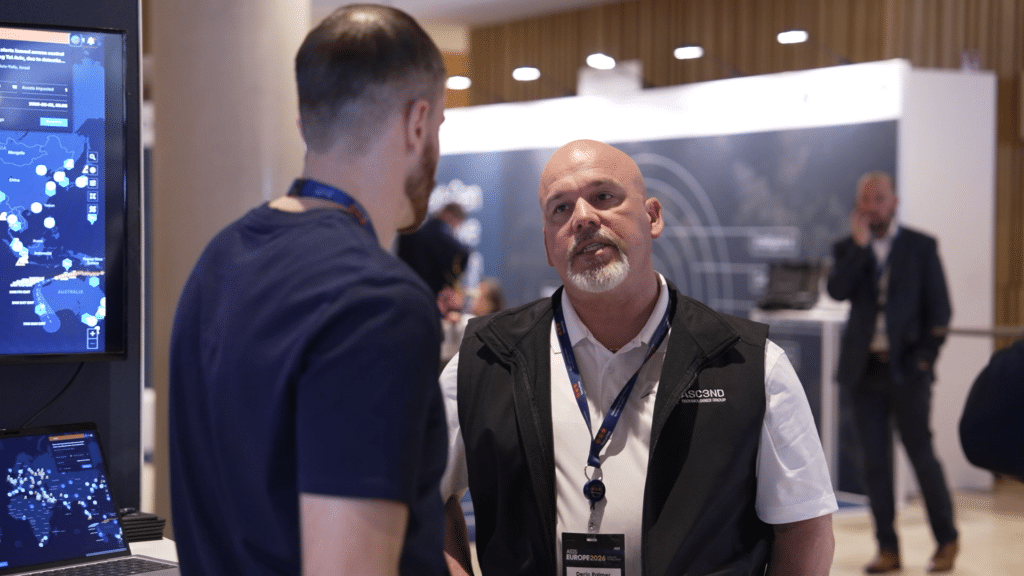
At ASIS Europe 2026, Restrata sat down with security and resilience leaders from some of the world’s largest organisations. The conversations were consistent, candid, and urgent. The industry is ready to move – and the organisations that move first will define what best-in-class security operations looks like for the next decade.
Why Fragmented Security Systems Are a Strategic Liability
Ask any head of security at a large enterprise organisation about their current technology stack and you will hear a familiar story: a travel risk platform here, an incident management tool there, a contractor tracking system that doesn’t talk to either, and a reporting process that still relies on someone manually pulling data from three different dashboards the moment something goes wrong.
This is not a technology failure. It is an architecture failure. The data exists. It has always existed. The problem is that the barriers to accessing it – across siloed systems, locked-down platforms, and incompatible data formats – mean that in practice, security teams operate without the full picture.
“The barriers to accessing the data means that, in essence, they don’t.”
For a 5,000-person organisation with personnel across multiple high-risk geographies, that gap is not a minor inconvenience. It is a structural risk. When an incident unfolds – a geopolitical event, a security threat, an emergency evacuation – the cost of slow, incomplete information is measured in outcomes, not efficiency metrics.
Unified security operations platforms solve this at the architectural level. By consolidating all operational data into a single source of truth, security teams gain something they have never reliably had: complete situational awareness, in real time, without having to stitch it together manually under pressure.
What a Single Source of Truth Actually Means for Security Operations
The phrase “single source of truth” gets used loosely in enterprise software. In the context of security operations, it has a precise meaning: one platform that holds all of an organisation’s people data, location data, risk intelligence, incident history, contractor information, and communication records – and makes all of it queryable, reportable, and actionable from a single interface.
resilienceOS is built to be that platform. For security leaders managing large, distributed workforces in complex environments, it means that when an event happens anywhere in the world, the response starts from a complete operational picture – not a scramble to find out who is where and what systems hold which information.
“resilienceOS is the founding platform. That, for me, is the single source of truth that an organisation has. They have all of their information in one place.”
This matters at scale. A mining company with operations across four continents, a construction firm managing thousands of contractors in conflict-adjacent regions, an energy company with rotating offshore crews – these are organisations where the gap between complete information and partial information is the gap between an effective response and a crisis.
How AI Is Changing the Speed of Security Decision-Making
Artificial intelligence is being marketed to enterprise security teams from every direction. Most of what is being sold does not reflect how security operations actually work. Point-solution AI features – a predictive risk score here, an automated alert there – do not solve the underlying problem if the data feeding them is still fragmented.
The AI that changes security operations is AI that operates across a unified data environment. That is the distinction that security leaders at ASIS Europe were drawing clearly.
rosa – Restrata’s operational AI – is built on exactly this principle. Because she operates on top of resilienceOS, she has access to the full operational picture: every asset, every person, every risk signal, every historical incident. That breadth is what makes her useful in practice rather than impressive in a demo.
In operational terms, rosa allows security teams to interrogate their data in natural language, surface patterns across large datasets that would take analysts hours to find manually, and generate senior leadership briefings in the time it previously took to pull the raw data together.
“Then she’s able to help them make decisions quicker and report to senior managers quicker when an event happens.”
For CSOs and heads of security, the value proposition is direct: the efficiency, the ability to react, the ability to stay on top of the organisation’s risk. These are outcomes that have always been the goal. rosa makes them achievable at a speed that was not previously possible.
AI Augments Security Professionals – It Does Not Replace Them
One of the most important conversations at ASIS Europe 2026 was about what AI does not do. In security operations, human judgment is irreplaceable. The contextual knowledge of an experienced security analyst – the ability to read a situation, weigh competing risk factors, and make a call under pressure – is not something that can or should be automated.
The security leaders who are embracing AI in their operations are not doing so because they want to reduce headcount. They are doing so because they want to make their existing teams dramatically more effective.
“It’s not removing the human in the loop – it’s allowing the human to be much more productive and efficient.”
This is the design principle that makes rosa different from the category of AI tools that generate anxiety rather than adoption inside security teams. She handles the data-intensive, time-consuming work that pulls analysts away from the decisions that actually require human judgment. The human stays in the loop – better informed, faster to act, and freed from the operational overhead that previously consumed most of their bandwidth.
The End of the Closed Bundle: What Enterprise Security Leaders Are Demanding
The enterprise security technology market has been dominated for two decades by closed, proprietary systems that locked organisations into vendor relationships built on switching costs rather than genuine value. Security leaders at ASIS Europe 2026 were direct about this: they are done with it.
“Security teams inside companies are taking software and data more seriously, and they are seeing through some of the more closed bundles this industry has had for the last 20 years.”
The shift is being driven by a combination of factors. AI has raised the expectation of what integrated platforms can do. Security teams have become more technically sophisticated. And the consequences of poor technology decisions have become more visible – both to the teams managing them and to the boards demanding accountability for operational resilience.
The organisations that are winning in this environment are those that have made a deliberate decision to consolidate: fewer platforms, cleaner data architecture, and an AI layer that can work across the full operational picture. The ones still managing complexity through complexity – more integrations, more point solutions, more manual workarounds – are falling behind in ways that will become harder to recover from.
What Best-in-Class Enterprise Security Operations Looks Like in 2026
The security leaders who are most effectively managing large-scale, high-risk operations share a set of characteristics that are increasingly non-negotiable:
Unified operational data – all people, assets, risk intelligence, and incident history in one platform, accessible in real time.
AI that works across the full data environment – not feature-level AI bolted onto siloed systems, but an intelligence layer that interrogates the complete operational picture.
Speed from detection to decision – the ability to move from an emerging event to a senior leadership briefing in minutes rather than hours.
Workflows, intelligence, and action in one place – not three platforms talking to each other imperfectly, but one environment where the full response cycle lives.
“The winners will be the platforms that combine workflows, intelligence, and action all in one place.”
This is not a vision for 2030. It is the standard that the most operationally mature security teams are moving toward now. And the organisations that close the gap first will have a resilience advantage that is genuinely hard for their peers to replicate quickly.
The Operational Resilience Imperative
What was good enough for the last 20 years is not good enough for the next four. The security leaders who said this at ASIS Europe 2026 were not being dramatic. They were describing a market reality that is already reshaping how the most sophisticated organisations think about operational resilience.
The organisations operating in complex, high-risk environments – energy, oil and gas, mining, industrial, critical infrastructure – do not have the luxury of gradual technology improvement. Their risk environments are moving too fast, their operational footprints are too complex, and the expectations of boards and regulators are too high.
resilienceOS and rosa are built for these organisations. A unified platform that consolidates all operational data into a single source of truth, with an AI layer that transforms that data into faster decisions, clearer reporting, and genuine operational advantage.
The shift is happening. The question is where your organisation is in it.
Find out how resilienceOS and rosa can transform security operations at your organisation. Request a personalised demo with our team – click here to book a meeting.